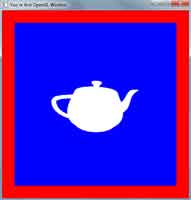
If you want to use any type of off screen rendering process, then frame buffers are probably the go for you. They allow you to render an entire scene, directly to a texture.
 Just like we assign materials to objects in OpenGL, we assign materials to objects in PhysX, only here they don't affect lighting, they affect the physical 'touch' of an object.
 After setting up a PhysX scene, you then need to assign some parameters, the parameter I will focus on is skin width.
 PhysX, just like OpenGL, needs to be setup, but and instead of setting the OpenGL state, we setup our PhysX scene. Inside a scene, is where all collisions and physics are calculated.
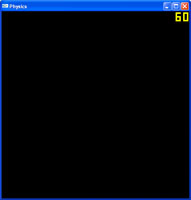 Lets attach a GLUT window do our PhysX application!
 PhysX is the physics API by Nvidia, and I had a play with it back when Ageia owned it. I am not sure how current these tutorials are, but I am keeping them up in the hope they help someone.