<?xml version="1.0" encoding="UTF-8"?>
<rss version="2.0"
	xmlns:content="http://purl.org/rss/1.0/modules/content/"
	xmlns:wfw="http://wellformedweb.org/CommentAPI/"
	xmlns:dc="http://purl.org/dc/elements/1.1/"
	xmlns:atom="http://www.w3.org/2005/Atom"
	xmlns:sy="http://purl.org/rss/1.0/modules/syndication/"
	xmlns:slash="http://purl.org/rss/1.0/modules/slash/"
	>

<channel>
	<title>Swiftless Tutorials &#187; OpenGL</title>
	<atom:link href="http://www.swiftless.com/tag/opengl/feed" rel="self" type="application/rss+xml" />
	<link>http://www.swiftless.com</link>
	<description>Game Programming and Computer Graphics Tutorials</description>
	<lastBuildDate>Sat, 10 Sep 2011 04:18:20 +0000</lastBuildDate>
	<language>en</language>
	<sy:updatePeriod>hourly</sy:updatePeriod>
	<sy:updateFrequency>1</sy:updateFrequency>
	<generator>http://wordpress.org/?v=3.2.1</generator>
		<item>
		<title>5. OpenGL 4 Vertex Buffer Objects (VBOs) for Color</title>
		<link>http://www.swiftless.com/tutorials/opengl4/5-opengl-4-vao-color.html</link>
		<comments>http://www.swiftless.com/tutorials/opengl4/5-opengl-4-vao-color.html#comments</comments>
		<pubDate>Thu, 10 Feb 2011 10:29:22 +0000</pubDate>
		<dc:creator>Swiftless</dc:creator>
				<category><![CDATA[OpenGL 4]]></category>
		<category><![CDATA[3]]></category>
		<category><![CDATA[4]]></category>
		<category><![CDATA[color]]></category>
		<category><![CDATA[gl]]></category>
		<category><![CDATA[GLSL]]></category>
		<category><![CDATA[OpenGL]]></category>
		<category><![CDATA[programming]]></category>
		<category><![CDATA[tutorial]]></category>
		<category><![CDATA[vao]]></category>
		<category><![CDATA[vbo]]></category>
		<category><![CDATA[vertex array object]]></category>
		<category><![CDATA[vertex buffer object]]></category>

		<guid isPermaLink="false">http://www.swiftless.com/?p=717</guid>
		<description><![CDATA[Because OpenGL 3.x and OpenGL 4.x deprecated and then removed virtually all of the fixed function pipeline, how do we colour our polygons these days?. This tutorial will show you how to use two Vertex Buffer Objects inside of a Vertex Array Object to both draw and colour our shapes at the same time.


Related posts:<ol><li><a href='http://www.swiftless.com/tutorials/opengl4/4-opengl-4-vao.html' rel='bookmark' title='4. OpenGL 4 Vertex Array Objects (VAO)'>4. OpenGL 4 Vertex Array Objects (VAO)</a></li>
<li><a href='http://www.swiftless.com/tutorials/opengl/6_vbo.html' rel='bookmark' title='6. Terrain Vertex Buffer Objects'>6. Terrain Vertex Buffer Objects</a></li>
<li><a href='http://www.swiftless.com/tutorials/opengl/color.html' rel='bookmark' title='5. OpenGL Color (Version 2.0)'>5. OpenGL Color (Version 2.0)</a></li>
</ol>]]></description>
		<wfw:commentRss>http://www.swiftless.com/tutorials/opengl4/5-opengl-4-vao-color.html/feed</wfw:commentRss>
		<slash:comments>16</slash:comments>
		</item>
		<item>
		<title>4. OpenGL 4 Vertex Array Objects (VAO)</title>
		<link>http://www.swiftless.com/tutorials/opengl4/4-opengl-4-vao.html</link>
		<comments>http://www.swiftless.com/tutorials/opengl4/4-opengl-4-vao.html#comments</comments>
		<pubDate>Thu, 16 Dec 2010 06:41:46 +0000</pubDate>
		<dc:creator>Swiftless</dc:creator>
				<category><![CDATA[OpenGL 4]]></category>
		<category><![CDATA[3]]></category>
		<category><![CDATA[4]]></category>
		<category><![CDATA[gl]]></category>
		<category><![CDATA[GLSL]]></category>
		<category><![CDATA[OpenGL]]></category>
		<category><![CDATA[programming]]></category>
		<category><![CDATA[tutorial]]></category>
		<category><![CDATA[vao]]></category>
		<category><![CDATA[vbo]]></category>
		<category><![CDATA[vertex array object]]></category>

		<guid isPermaLink="false">http://www.swiftless.com/?p=701</guid>
		<description><![CDATA[OpenGL 3.x and OpenGL 4.x deprecated virtually all client side rendering calls such as glEnable(GL_TRIANGLES) and glVertex3f, so how do we render things these days?. This tutorial will show you how to use Vertex Array Objects and Vertex Buffer Objects to render in compliance with OpenGL 3.x and up at blistering speeds compared to previous rendering methods in OpenGL.


Related posts:<ol><li><a href='http://www.swiftless.com/tutorials/opengl4/5-opengl-4-vao-color.html' rel='bookmark' title='5. OpenGL 4 Vertex Buffer Objects (VBOs) for Color'>5. OpenGL 4 Vertex Buffer Objects (VBOs) for Color</a></li>
<li><a href='http://www.swiftless.com/tutorials/opengl/6_vbo.html' rel='bookmark' title='6. Terrain Vertex Buffer Objects'>6. Terrain Vertex Buffer Objects</a></li>
<li><a href='http://www.swiftless.com/tutorials/opengl4/2-opengl-shaders.html' rel='bookmark' title='2. OpenGL 4 Shaders'>2. OpenGL 4 Shaders</a></li>
</ol>]]></description>
		<wfw:commentRss>http://www.swiftless.com/tutorials/opengl4/4-opengl-4-vao.html/feed</wfw:commentRss>
		<slash:comments>32</slash:comments>
		</item>
		<item>
		<title>2. OpenGL 4 Shaders</title>
		<link>http://www.swiftless.com/tutorials/opengl4/2-opengl-shaders.html</link>
		<comments>http://www.swiftless.com/tutorials/opengl4/2-opengl-shaders.html#comments</comments>
		<pubDate>Sun, 08 Aug 2010 02:07:10 +0000</pubDate>
		<dc:creator>Swiftless</dc:creator>
				<category><![CDATA[OpenGL 4]]></category>
		<category><![CDATA[3]]></category>
		<category><![CDATA[4]]></category>
		<category><![CDATA[gl]]></category>
		<category><![CDATA[GLSL]]></category>
		<category><![CDATA[OpenGL]]></category>
		<category><![CDATA[programming]]></category>
		<category><![CDATA[shader]]></category>
		<category><![CDATA[tutorial]]></category>

		<guid isPermaLink="false">http://www.swiftless.com/?p=674</guid>
		<description><![CDATA[OpenGL 3.x and OpenGL 4.x rely on you to use shaders for all of your effects. This tutorial will show you how to incorporate the shaders from the GLSL section of the site into our new framework.


Related posts:<ol><li><a href='http://www.swiftless.com/tutorials/opengl4/5-opengl-4-vao-color.html' rel='bookmark' title='5. OpenGL 4 Vertex Buffer Objects (VBOs) for Color'>5. OpenGL 4 Vertex Buffer Objects (VBOs) for Color</a></li>
<li><a href='http://www.swiftless.com/tutorials/opengl4/4-opengl-4-vao.html' rel='bookmark' title='4. OpenGL 4 Vertex Array Objects (VAO)'>4. OpenGL 4 Vertex Array Objects (VAO)</a></li>
<li><a href='http://www.swiftless.com/software/swiftless-glsl-shader-developer.html' rel='bookmark' title='Swiftless GLSL Shader Developer'>Swiftless GLSL Shader Developer</a></li>
</ol>]]></description>
		<wfw:commentRss>http://www.swiftless.com/tutorials/opengl4/2-opengl-shaders.html/feed</wfw:commentRss>
		<slash:comments>4</slash:comments>
		</item>
		<item>
		<title>1. OpenGL 4 Window</title>
		<link>http://www.swiftless.com/tutorials/opengl4/1-opengl-window.html</link>
		<comments>http://www.swiftless.com/tutorials/opengl4/1-opengl-window.html#comments</comments>
		<pubDate>Tue, 03 Aug 2010 11:43:47 +0000</pubDate>
		<dc:creator>Swiftless</dc:creator>
				<category><![CDATA[OpenGL 4]]></category>
		<category><![CDATA[3]]></category>
		<category><![CDATA[4]]></category>
		<category><![CDATA[gl]]></category>
		<category><![CDATA[OpenGL]]></category>
		<category><![CDATA[setup]]></category>
		<category><![CDATA[tutorial]]></category>
		<category><![CDATA[window]]></category>

		<guid isPermaLink="false">http://www.swiftless.com/?p=647</guid>
		<description><![CDATA[OpenGL 3.x and OpenGL 4.x came out all of a sudden, but not many people made the switch. Here you will learn how to create a window with an OpenGL 3.2 capable context, which can be used as a basis for further tutorials.


Related posts:<ol><li><a href='http://www.swiftless.com/tutorials/opengl4/2-opengl-shaders.html' rel='bookmark' title='2. OpenGL 4 Shaders'>2. OpenGL 4 Shaders</a></li>
<li><a href='http://www.swiftless.com/tutorials/opengl4/4-opengl-4-vao.html' rel='bookmark' title='4. OpenGL 4 Vertex Array Objects (VAO)'>4. OpenGL 4 Vertex Array Objects (VAO)</a></li>
<li><a href='http://www.swiftless.com/tutorials/opengl/window.html' rel='bookmark' title='1. OpenGL Window (Version 2.0)'>1. OpenGL Window (Version 2.0)</a></li>
</ol>]]></description>
		<wfw:commentRss>http://www.swiftless.com/tutorials/opengl4/1-opengl-window.html/feed</wfw:commentRss>
		<slash:comments>45</slash:comments>
		</item>
		<item>
		<title>8. Bump Mapping in GLSL</title>
		<link>http://www.swiftless.com/tutorials/glsl/8_bump_mapping.html</link>
		<comments>http://www.swiftless.com/tutorials/glsl/8_bump_mapping.html#comments</comments>
		<pubDate>Thu, 24 Jun 2010 10:43:50 +0000</pubDate>
		<dc:creator>Swiftless</dc:creator>
				<category><![CDATA[GLSL]]></category>
		<category><![CDATA[Tutorials]]></category>
		<category><![CDATA[bump]]></category>
		<category><![CDATA[map]]></category>
		<category><![CDATA[mapping]]></category>
		<category><![CDATA[normal]]></category>
		<category><![CDATA[OpenGL]]></category>
		<category><![CDATA[programming]]></category>
		<category><![CDATA[texture]]></category>
		<category><![CDATA[tutorial]]></category>

		<guid isPermaLink="false">http://www.swiftless.com/?p=626</guid>
		<description><![CDATA[<img src="http://www.swiftless.com/tutorials/glsl/pics/8_bump_mapping.jpg" alt="GLSL Bump Mapping Tutorial Preview" width=100 height=100 align="left" hspace=5 vspace=5 />Bump mapping adds an extra sense of realism to today's computer graphics applications that is so simple, it just cannot be ignored. Learn how to do this in GLSL with OpenGL.


Related posts:<ol><li><a href='http://www.swiftless.com/uncategorized/new-bump-mapping-tutorial.html' rel='bookmark' title='New Bump Mapping Tutorial'>New Bump Mapping Tutorial</a></li>
<li><a href='http://www.swiftless.com/tutorials/glsl/7_texturing.html' rel='bookmark' title='7. Texturing in GLSL'>7. Texturing in GLSL</a></li>
<li><a href='http://www.swiftless.com/tutorials/glsl/5_lighting_perpixel.html' rel='bookmark' title='5. GLSL Per Pixel Lighting'>5. GLSL Per Pixel Lighting</a></li>
</ol>]]></description>
		<wfw:commentRss>http://www.swiftless.com/tutorials/glsl/8_bump_mapping.html/feed</wfw:commentRss>
		<slash:comments>11</slash:comments>
		</item>
		<item>
		<title>Swiftless GLSL Shader Developer</title>
		<link>http://www.swiftless.com/software/swiftless-glsl-shader-developer.html</link>
		<comments>http://www.swiftless.com/software/swiftless-glsl-shader-developer.html#comments</comments>
		<pubDate>Mon, 14 Jun 2010 23:50:07 +0000</pubDate>
		<dc:creator>Swiftless</dc:creator>
				<category><![CDATA[Software]]></category>
		<category><![CDATA[developer]]></category>
		<category><![CDATA[fragment]]></category>
		<category><![CDATA[geometry]]></category>
		<category><![CDATA[gl]]></category>
		<category><![CDATA[GLSL]]></category>
		<category><![CDATA[open]]></category>
		<category><![CDATA[OpenGL]]></category>
		<category><![CDATA[programming]]></category>
		<category><![CDATA[shader]]></category>
		<category><![CDATA[vertex]]></category>

		<guid isPermaLink="false">http://www.swiftless.com/?p=620</guid>
		<description><![CDATA[Swiftless GLSL Shader Developer is a new shader designer/creator which is currently in it's first public release. It features fragment, vertex and geometry shader support, as well as post processing.


Related posts:<ol><li><a href='http://www.swiftless.com/uncategorized/swiftless-glsl-shader-developer-version-0-1a.html' rel='bookmark' title='Swiftless GLSL Shader Developer Version 0.1a'>Swiftless GLSL Shader Developer Version 0.1a</a></li>
<li><a href='http://www.swiftless.com/tutorials/opengl4/2-opengl-shaders.html' rel='bookmark' title='2. OpenGL 4 Shaders'>2. OpenGL 4 Shaders</a></li>
<li><a href='http://www.swiftless.com/tutorials/glsl/4_lighting.html' rel='bookmark' title='4. GLSL Lighting'>4. GLSL Lighting</a></li>
</ol>]]></description>
		<wfw:commentRss>http://www.swiftless.com/software/swiftless-glsl-shader-developer.html/feed</wfw:commentRss>
		<slash:comments>8</slash:comments>
		</item>
		<item>
		<title>36. OpenGL Framebuffers</title>
		<link>http://www.swiftless.com/tutorials/opengl/framebuffer.html</link>
		<comments>http://www.swiftless.com/tutorials/opengl/framebuffer.html#comments</comments>
		<pubDate>Thu, 22 Apr 2010 04:09:18 +0000</pubDate>
		<dc:creator>Swiftless</dc:creator>
				<category><![CDATA[OpenGL]]></category>
		<category><![CDATA[buffer]]></category>
		<category><![CDATA[cube]]></category>
		<category><![CDATA[fbo]]></category>
		<category><![CDATA[frame]]></category>
		<category><![CDATA[frame buffer]]></category>
		<category><![CDATA[glut]]></category>
		<category><![CDATA[programming]]></category>
		<category><![CDATA[render]]></category>
		<category><![CDATA[tutorial]]></category>

		<guid isPermaLink="false">http://www.swiftless.com/?p=557</guid>
		<description><![CDATA[<img src="http://www.swiftless.com/tutorials/opengl/pics/framebuffer.jpg" alt="OpenGL Framebuffer Tutorial Preview" width="100" height="100" align="left" hspace="5" vspace="5" /><br />If you want to use any type of off screen rendering process, then frame buffers are probably the go for you. They allow you to render an entire scene, directly to a texture.<br clear="all"/>


Related posts:<ol><li><a href='http://www.swiftless.com/tutorials/opengl/cube.html' rel='bookmark' title='6. OpenGL Cube (Version 2.0)'>6. OpenGL Cube (Version 2.0)</a></li>
<li><a href='http://www.swiftless.com/tutorials/opengl/basic_shadows.html' rel='bookmark' title='27. OpenGL Basic Shadows'>27. OpenGL Basic Shadows</a></li>
<li><a href='http://www.swiftless.com/tutorials/opengl/basic_reflection.html' rel='bookmark' title='28. OpenGL Basic Reflection'>28. OpenGL Basic Reflection</a></li>
</ol>]]></description>
		<wfw:commentRss>http://www.swiftless.com/tutorials/opengl/framebuffer.html/feed</wfw:commentRss>
		<slash:comments>8</slash:comments>
		</item>
		<item>
		<title>7. Terrain Level Of Detail</title>
		<link>http://www.swiftless.com/tutorials/terrain/7_lod.html</link>
		<comments>http://www.swiftless.com/tutorials/terrain/7_lod.html#comments</comments>
		<pubDate>Thu, 25 Mar 2010 09:09:16 +0000</pubDate>
		<dc:creator>Swiftless</dc:creator>
				<category><![CDATA[Terrain]]></category>
		<category><![CDATA[detail]]></category>
		<category><![CDATA[level]]></category>
		<category><![CDATA[lod]]></category>
		<category><![CDATA[of]]></category>
		<category><![CDATA[OpenGL]]></category>
		<category><![CDATA[programming]]></category>
		<category><![CDATA[tutorial]]></category>

		<guid isPermaLink="false">http://swiftless.com/wordpress/?p=265</guid>
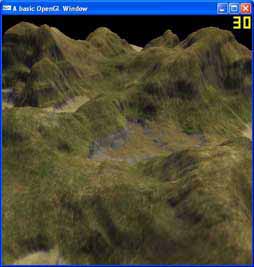
		<description><![CDATA[<img src="http://swiftless.com/tutorials/terrain/7_lod/7_lod.jpg" alt="Terrain Level of Detail Tutorial Preview" width="100" height="100" align="left" hspace="5" vspace="5" />Level of Detail is a means of decreasing the polygon count of an object to gain a speed boost in your application. This is an extremely simple take on this, which simply draws every fourth vertex. The best part is, that on such a large terrain, you don't even notice this.<br clear="all" />

Related posts:<ol><li><a href='http://www.swiftless.com/tutorials/opengl/6_vbo.html' rel='bookmark' title='6. Terrain Vertex Buffer Objects'>6. Terrain Vertex Buffer Objects</a></li>
<li><a href='http://www.swiftless.com/tutorials/terrain/4_triangle_strips.html' rel='bookmark' title='4. Terrain Triangle Strips'>4. Terrain Triangle Strips</a></li>
<li><a href='http://www.swiftless.com/tutorials/terrain/2_loading.html' rel='bookmark' title='2. Terrain Loading'>2. Terrain Loading</a></li>
</ol>]]></description>
		<wfw:commentRss>http://www.swiftless.com/tutorials/terrain/7_lod.html/feed</wfw:commentRss>
		<slash:comments>4</slash:comments>
		</item>
		<item>
		<title>6. Terrain Vertex Buffer Objects</title>
		<link>http://www.swiftless.com/tutorials/opengl/6_vbo.html</link>
		<comments>http://www.swiftless.com/tutorials/opengl/6_vbo.html#comments</comments>
		<pubDate>Thu, 25 Mar 2010 09:07:36 +0000</pubDate>
		<dc:creator>Swiftless</dc:creator>
				<category><![CDATA[OpenGL]]></category>
		<category><![CDATA[Terrain]]></category>
		<category><![CDATA[buffer]]></category>
		<category><![CDATA[object]]></category>
		<category><![CDATA[programming]]></category>
		<category><![CDATA[tutorial]]></category>
		<category><![CDATA[vbo]]></category>
		<category><![CDATA[vertex]]></category>

		<guid isPermaLink="false">http://swiftless.com/wordpress/?p=263</guid>
		<description><![CDATA[<img src="http://swiftless.com/tutorials/terrain/6_vbo/6_vbo.jpg" alt="Terrain Vertex Buffer Object Tutorial Preview" width="100" height="100" align="left" hspace="5" vspace="5" />Vertex Buffer Objects are used to store vertices, their indices and other information on the graphics card, for OpenGL to access directly. They are extremely fast and effecient, and are meant to supersede Display Lists. So lets use them for our terrain!<br clear="all" />


Related posts:<ol><li><a href='http://www.swiftless.com/tutorials/terrain/7_lod.html' rel='bookmark' title='7. Terrain Level Of Detail'>7. Terrain Level Of Detail</a></li>
<li><a href='http://www.swiftless.com/tutorials/opengl4/5-opengl-4-vao-color.html' rel='bookmark' title='5. OpenGL 4 Vertex Buffer Objects (VBOs) for Color'>5. OpenGL 4 Vertex Buffer Objects (VBOs) for Color</a></li>
<li><a href='http://www.swiftless.com/tutorials/opengl4/4-opengl-4-vao.html' rel='bookmark' title='4. OpenGL 4 Vertex Array Objects (VAO)'>4. OpenGL 4 Vertex Array Objects (VAO)</a></li>
</ol>]]></description>
		<wfw:commentRss>http://www.swiftless.com/tutorials/opengl/6_vbo.html/feed</wfw:commentRss>
		<slash:comments>15</slash:comments>
		</item>
		<item>
		<title>5. Terrain Textures</title>
		<link>http://www.swiftless.com/tutorials/terrain/5_textures.html</link>
		<comments>http://www.swiftless.com/tutorials/terrain/5_textures.html#comments</comments>
		<pubDate>Thu, 25 Mar 2010 08:58:55 +0000</pubDate>
		<dc:creator>Swiftless</dc:creator>
				<category><![CDATA[Terrain]]></category>
		<category><![CDATA[OpenGL]]></category>
		<category><![CDATA[programming]]></category>
		<category><![CDATA[texture]]></category>
		<category><![CDATA[tutorial]]></category>

		<guid isPermaLink="false">http://swiftless.com/wordpress/?p=260</guid>
		<description><![CDATA[<img src="http://swiftless.com/tutorials/terrain/5_textures/5_textures.jpg" alt="Terrain Texture Tutorial Preview" width="100" height="100" align="left" hspace="5" vspace="5" />Textures are going to be what make and break this terrain. A nice looking tutorial, and you will be seeing grass, mud, rocks and sand, but a bad texture and you will see just a bunch of colors. Lets add a nice texture to our terrain shall we?<br clear="all" />


Related posts:<ol><li><a href='http://www.swiftless.com/tutorials/terrain/4_triangle_strips.html' rel='bookmark' title='4. Terrain Triangle Strips'>4. Terrain Triangle Strips</a></li>
<li><a href='http://www.swiftless.com/tutorials/terrain/3_rendering.html' rel='bookmark' title='3. Terrain Rendering'>3. Terrain Rendering</a></li>
<li><a href='http://www.swiftless.com/tutorials/terrain/7_lod.html' rel='bookmark' title='7. Terrain Level Of Detail'>7. Terrain Level Of Detail</a></li>
</ol>]]></description>
		<wfw:commentRss>http://www.swiftless.com/tutorials/terrain/5_textures.html/feed</wfw:commentRss>
		<slash:comments>4</slash:comments>
		</item>
	</channel>
</rss>