<?xml version="1.0" encoding="UTF-8"?>
<rss version="2.0"
	xmlns:content="http://purl.org/rss/1.0/modules/content/"
	xmlns:wfw="http://wellformedweb.org/CommentAPI/"
	xmlns:dc="http://purl.org/dc/elements/1.1/"
	xmlns:atom="http://www.w3.org/2005/Atom"
	xmlns:sy="http://purl.org/rss/1.0/modules/syndication/"
	xmlns:slash="http://purl.org/rss/1.0/modules/slash/"
	>

<channel>
	<title>Swiftless Tutorials &#187; OpenGL</title>
	<atom:link href="http://www.swiftless.com/category/tutorials/opengl/feed" rel="self" type="application/rss+xml" />
	<link>http://www.swiftless.com</link>
	<description>Game Programming and Computer Graphics Tutorials</description>
	<lastBuildDate>Sat, 10 Sep 2011 04:18:20 +0000</lastBuildDate>
	<language>en</language>
	<sy:updatePeriod>hourly</sy:updatePeriod>
	<sy:updateFrequency>1</sy:updateFrequency>
	<generator>http://wordpress.org/?v=3.2.1</generator>
		<item>
		<title>36. OpenGL Framebuffers</title>
		<link>http://www.swiftless.com/tutorials/opengl/framebuffer.html</link>
		<comments>http://www.swiftless.com/tutorials/opengl/framebuffer.html#comments</comments>
		<pubDate>Thu, 22 Apr 2010 04:09:18 +0000</pubDate>
		<dc:creator>Swiftless</dc:creator>
				<category><![CDATA[OpenGL]]></category>
		<category><![CDATA[buffer]]></category>
		<category><![CDATA[cube]]></category>
		<category><![CDATA[fbo]]></category>
		<category><![CDATA[frame]]></category>
		<category><![CDATA[frame buffer]]></category>
		<category><![CDATA[glut]]></category>
		<category><![CDATA[programming]]></category>
		<category><![CDATA[render]]></category>
		<category><![CDATA[tutorial]]></category>

		<guid isPermaLink="false">http://www.swiftless.com/?p=557</guid>
		<description><![CDATA[<img src="http://www.swiftless.com/tutorials/opengl/pics/framebuffer.jpg" alt="OpenGL Framebuffer Tutorial Preview" width="100" height="100" align="left" hspace="5" vspace="5" /><br />If you want to use any type of off screen rendering process, then frame buffers are probably the go for you. They allow you to render an entire scene, directly to a texture.<br clear="all"/>


Related posts:<ol><li><a href='http://www.swiftless.com/tutorials/opengl/cube.html' rel='bookmark' title='6. OpenGL Cube (Version 2.0)'>6. OpenGL Cube (Version 2.0)</a></li>
<li><a href='http://www.swiftless.com/tutorials/opengl/basic_shadows.html' rel='bookmark' title='27. OpenGL Basic Shadows'>27. OpenGL Basic Shadows</a></li>
<li><a href='http://www.swiftless.com/tutorials/opengl/basic_reflection.html' rel='bookmark' title='28. OpenGL Basic Reflection'>28. OpenGL Basic Reflection</a></li>
</ol>]]></description>
		<wfw:commentRss>http://www.swiftless.com/tutorials/opengl/framebuffer.html/feed</wfw:commentRss>
		<slash:comments>8</slash:comments>
		</item>
		<item>
		<title>3. OpenGL Tips</title>
		<link>http://www.swiftless.com/tutorials/opengl/opengltips.html</link>
		<comments>http://www.swiftless.com/tutorials/opengl/opengltips.html#comments</comments>
		<pubDate>Thu, 25 Mar 2010 10:02:43 +0000</pubDate>
		<dc:creator>Swiftless</dc:creator>
				<category><![CDATA[Miscellaneous]]></category>
		<category><![CDATA[OpenGL]]></category>

		<guid isPermaLink="false">http://swiftless.com/wordpress/?p=348</guid>
		<description><![CDATA[Here is a collection of tips for using OpenGL that I have started compiling, expect it to grow :)


Related posts:<ol><li><a href='http://www.swiftless.com/tutorials/opengl/lighting_types.html' rel='bookmark' title='13. OpenGL Lighting Types'>13. OpenGL Lighting Types</a></li>
</ol>]]></description>
		<wfw:commentRss>http://www.swiftless.com/tutorials/opengl/opengltips.html/feed</wfw:commentRss>
		<slash:comments>8</slash:comments>
		</item>
		<item>
		<title>1. OpenGL Drivers</title>
		<link>http://www.swiftless.com/tutorials/opengl/gldrivers.html</link>
		<comments>http://www.swiftless.com/tutorials/opengl/gldrivers.html#comments</comments>
		<pubDate>Thu, 25 Mar 2010 10:01:34 +0000</pubDate>
		<dc:creator>Swiftless</dc:creator>
				<category><![CDATA[Miscellaneous]]></category>
		<category><![CDATA[OpenGL]]></category>

		<guid isPermaLink="false">http://swiftless.com/wordpress/?p=345</guid>
		<description><![CDATA[The OpenGL drivers can be tricky for some people to find, and whilst I recommend using GLEW and FreeGLUT, feel free to download these files, although they may be out of date.


Related posts:<ol><li><a href='http://www.swiftless.com/uncategorized/opengl-framebuffer-tutorial-now-up.html' rel='bookmark' title='OpenGL Framebuffer Tutorial Now Up'>OpenGL Framebuffer Tutorial Now Up</a></li>
</ol>]]></description>
		<wfw:commentRss>http://www.swiftless.com/tutorials/opengl/gldrivers.html/feed</wfw:commentRss>
		<slash:comments>48</slash:comments>
		</item>
		<item>
		<title>6. Terrain Vertex Buffer Objects</title>
		<link>http://www.swiftless.com/tutorials/opengl/6_vbo.html</link>
		<comments>http://www.swiftless.com/tutorials/opengl/6_vbo.html#comments</comments>
		<pubDate>Thu, 25 Mar 2010 09:07:36 +0000</pubDate>
		<dc:creator>Swiftless</dc:creator>
				<category><![CDATA[OpenGL]]></category>
		<category><![CDATA[Terrain]]></category>
		<category><![CDATA[buffer]]></category>
		<category><![CDATA[object]]></category>
		<category><![CDATA[programming]]></category>
		<category><![CDATA[tutorial]]></category>
		<category><![CDATA[vbo]]></category>
		<category><![CDATA[vertex]]></category>

		<guid isPermaLink="false">http://swiftless.com/wordpress/?p=263</guid>
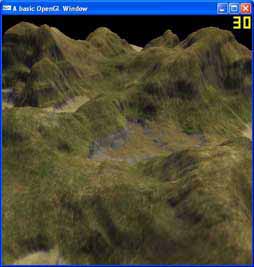
		<description><![CDATA[<img src="http://swiftless.com/tutorials/terrain/6_vbo/6_vbo.jpg" alt="Terrain Vertex Buffer Object Tutorial Preview" width="100" height="100" align="left" hspace="5" vspace="5" />Vertex Buffer Objects are used to store vertices, their indices and other information on the graphics card, for OpenGL to access directly. They are extremely fast and effecient, and are meant to supersede Display Lists. So lets use them for our terrain!<br clear="all" />

Related posts:<ol><li><a href='http://www.swiftless.com/tutorials/terrain/7_lod.html' rel='bookmark' title='7. Terrain Level Of Detail'>7. Terrain Level Of Detail</a></li>
<li><a href='http://www.swiftless.com/tutorials/opengl4/5-opengl-4-vao-color.html' rel='bookmark' title='5. OpenGL 4 Vertex Buffer Objects (VBOs) for Color'>5. OpenGL 4 Vertex Buffer Objects (VBOs) for Color</a></li>
<li><a href='http://www.swiftless.com/tutorials/opengl4/4-opengl-4-vao.html' rel='bookmark' title='4. OpenGL 4 Vertex Array Objects (VAO)'>4. OpenGL 4 Vertex Array Objects (VAO)</a></li>
</ol>]]></description>
		<wfw:commentRss>http://www.swiftless.com/tutorials/opengl/6_vbo.html/feed</wfw:commentRss>
		<slash:comments>15</slash:comments>
		</item>
		<item>
		<title>35. OpenGL Tiling Engine</title>
		<link>http://www.swiftless.com/tutorials/opengl/tiling.html</link>
		<comments>http://www.swiftless.com/tutorials/opengl/tiling.html#comments</comments>
		<pubDate>Thu, 25 Mar 2010 06:41:29 +0000</pubDate>
		<dc:creator>Swiftless</dc:creator>
				<category><![CDATA[OpenGL]]></category>
		<category><![CDATA[engine]]></category>
		<category><![CDATA[programming]]></category>
		<category><![CDATA[tiling]]></category>
		<category><![CDATA[tutorial]]></category>

		<guid isPermaLink="false">http://swiftless.com/wordpress/?p=216</guid>
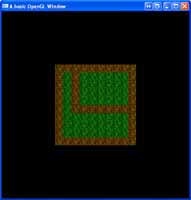
		<description><![CDATA[<img src="http://www.swiftless.com/tutorials/opengl/pics/tiling.jpg" alt="OpenGL Tiling Engine Tutorial Preview" width="100" height="100" align="left" hspace="5" vspace="5" />If you want to create a game like Sim City, or an RPG, then you are going to need some sort of tiling engine. This breaks up the ground into a bunch of known images and places them on runtim. This saves us having extremely large image files for an entire map and also makes it customizable in-game.<br clear="all"/>

Related posts:<ol><li><a href='http://www.swiftless.com/tutorials/opengl/particles.html' rel='bookmark' title='32. OpenGL Particle Engine'>32. OpenGL Particle Engine</a></li>
<li><a href='http://www.swiftless.com/tutorials/opengl/mipmap_generation.html' rel='bookmark' title='20. OpenGL MipMap Generation'>20. OpenGL MipMap Generation</a></li>
<li><a href='http://www.swiftless.com/tutorials/opengl/texture_animation.html' rel='bookmark' title='33. OpenGL Animating Textures'>33. OpenGL Animating Textures</a></li>
</ol>]]></description>
		<wfw:commentRss>http://www.swiftless.com/tutorials/opengl/tiling.html/feed</wfw:commentRss>
		<slash:comments>14</slash:comments>
		</item>
		<item>
		<title>34. Orthogonal Projections</title>
		<link>http://www.swiftless.com/tutorials/opengl/orthogonal.html</link>
		<comments>http://www.swiftless.com/tutorials/opengl/orthogonal.html#comments</comments>
		<pubDate>Thu, 25 Mar 2010 06:39:37 +0000</pubDate>
		<dc:creator>Swiftless</dc:creator>
				<category><![CDATA[OpenGL]]></category>
		<category><![CDATA[2D]]></category>
		<category><![CDATA[orthogonal]]></category>
		<category><![CDATA[programming]]></category>
		<category><![CDATA[projection]]></category>
		<category><![CDATA[tutorial]]></category>

		<guid isPermaLink="false">http://swiftless.com/wordpress/?p=214</guid>
		<description><![CDATA[<img src="http://www.swiftless.com/tutorials/opengl/pics/orthogonal.jpg" alt="OpenGL Orthogonal Projections Tutorial Preview" width="100" height="100" align="left" hspace="5" vspace="5" />While OpenGL is built for 3D rendering, it does also support 2D. This is where you want orthogonal projections, which are perfect for a Heads Up Display, or a menu system.<br clear="all"/>

Related posts:<ol><li><a href='http://www.swiftless.com/tutorials/opengl/reshape.html' rel='bookmark' title='2. OpenGL Window Reshaping (Version 2.0)'>2. OpenGL Window Reshaping (Version 2.0)</a></li>
<li><a href='http://www.swiftless.com/tutorials/opengl/square.html' rel='bookmark' title='4. OpenGL Primitives &#8211; Square (Version 2.0)'>4. OpenGL Primitives &#8211; Square (Version 2.0)</a></li>
<li><a href='http://www.swiftless.com/tutorials/opengl/cube.html' rel='bookmark' title='6. OpenGL Cube (Version 2.0)'>6. OpenGL Cube (Version 2.0)</a></li>
</ol>]]></description>
		<wfw:commentRss>http://www.swiftless.com/tutorials/opengl/orthogonal.html/feed</wfw:commentRss>
		<slash:comments>10</slash:comments>
		</item>
		<item>
		<title>33. OpenGL Animating Textures</title>
		<link>http://www.swiftless.com/tutorials/opengl/texture_animation.html</link>
		<comments>http://www.swiftless.com/tutorials/opengl/texture_animation.html#comments</comments>
		<pubDate>Thu, 25 Mar 2010 06:37:03 +0000</pubDate>
		<dc:creator>Swiftless</dc:creator>
				<category><![CDATA[OpenGL]]></category>
		<category><![CDATA[animation]]></category>
		<category><![CDATA[programming]]></category>
		<category><![CDATA[texture]]></category>
		<category><![CDATA[tutorial]]></category>

		<guid isPermaLink="false">http://swiftless.com/wordpress/?p=212</guid>
		<description><![CDATA[<img src="http://www.swiftless.com/tutorials/opengl/pics/animation.jpg" alt="OpenGL Animating Textures Tutorial Preview" width="100" height="100" align="left" hspace="5" vspace="5" />Textures by themselves are perfectly fine, you don't have to do anything with them. But have you ever wanted to load a movie into a 3D scene? Maybe you want to read a movie file, and display it on a quad moving around your scene. Well you can, but you have to do it frame, by frame.<br clear="all"/>

Related posts:<ol><li><a href='http://www.swiftless.com/tutorials/opengl/mipmap_generation.html' rel='bookmark' title='20. OpenGL MipMap Generation'>20. OpenGL MipMap Generation</a></li>
<li><a href='http://www.swiftless.com/tutorials/opengl/texture_under_windows.html' rel='bookmark' title='16. OpenGL Texturing'>16. OpenGL Texturing</a></li>
<li><a href='http://www.swiftless.com/tutorials/opengl/tiling.html' rel='bookmark' title='35. OpenGL Tiling Engine'>35. OpenGL Tiling Engine</a></li>
</ol>]]></description>
		<wfw:commentRss>http://www.swiftless.com/tutorials/opengl/texture_animation.html/feed</wfw:commentRss>
		<slash:comments>6</slash:comments>
		</item>
		<item>
		<title>32. OpenGL Particle Engine</title>
		<link>http://www.swiftless.com/tutorials/opengl/particles.html</link>
		<comments>http://www.swiftless.com/tutorials/opengl/particles.html#comments</comments>
		<pubDate>Thu, 25 Mar 2010 06:35:01 +0000</pubDate>
		<dc:creator>Swiftless</dc:creator>
				<category><![CDATA[OpenGL]]></category>
		<category><![CDATA[engine]]></category>
		<category><![CDATA[particle]]></category>
		<category><![CDATA[programming]]></category>
		<category><![CDATA[tutorial]]></category>

		<guid isPermaLink="false">http://swiftless.com/wordpress/?p=210</guid>
		<description><![CDATA[<img src="http://www.swiftless.com/tutorials/opengl/pics/particle.jpg" alt="OpenGL Particle Engine Tutorial Preview" width="100" height="100" align="left" hspace="5" vspace="5" />Lets face it, particles are ALOT of fun. Whether you want to create a weather system, some awesome fire, or just throw a million objects around randomly, they are both stimulating in a game, and fun.<br clear="all"/>

Related posts:<ol><li><a href='http://www.swiftless.com/tutorials/opengl/tiling.html' rel='bookmark' title='35. OpenGL Tiling Engine'>35. OpenGL Tiling Engine</a></li>
<li><a href='http://www.swiftless.com/tutorials/opengl/camera.html' rel='bookmark' title='22. OpenGL Camera'>22. OpenGL Camera</a></li>
<li><a href='http://www.swiftless.com/tutorials/opengl/camera2.html' rel='bookmark' title='23. OpenGL Camera Part 2'>23. OpenGL Camera Part 2</a></li>
</ol>]]></description>
		<wfw:commentRss>http://www.swiftless.com/tutorials/opengl/particles.html/feed</wfw:commentRss>
		<slash:comments>10</slash:comments>
		</item>
		<item>
		<title>31. OpenGL Sphere Creation</title>
		<link>http://www.swiftless.com/tutorials/opengl/sphere.html</link>
		<comments>http://www.swiftless.com/tutorials/opengl/sphere.html#comments</comments>
		<pubDate>Thu, 25 Mar 2010 06:33:32 +0000</pubDate>
		<dc:creator>Swiftless</dc:creator>
				<category><![CDATA[OpenGL]]></category>
		<category><![CDATA[programming]]></category>
		<category><![CDATA[sphere]]></category>
		<category><![CDATA[texture]]></category>
		<category><![CDATA[tutorial]]></category>

		<guid isPermaLink="false">http://swiftless.com/wordpress/?p=208</guid>
		<description><![CDATA[<img src="http://www.swiftless.com/tutorials/opengl/pics/sphere.jpg" alt="OpenGL Sphere Tutorial Preview" width="100" height="100" align="left" hspace="5" vspace="5" />While GLUT provides a sphere for us to draw, that sphere does not contain texture coordinates. In this tutorial, I will show you how to create your own sphere, which has texture coordinates included. Now you can make that solar system demo you have always wanted!<br clear="all"/>

Related posts:<ol><li><a href='http://www.swiftless.com/tutorials/opengl/collision.html' rel='bookmark' title='29. OpenGL Bounding Sphere Collision'>29. OpenGL Bounding Sphere Collision</a></li>
<li><a href='http://www.swiftless.com/tutorials/opengl/cube.html' rel='bookmark' title='6. OpenGL Cube (Version 2.0)'>6. OpenGL Cube (Version 2.0)</a></li>
<li><a href='http://www.swiftless.com/tutorials/opengl/texture_under_windows.html' rel='bookmark' title='16. OpenGL Texturing'>16. OpenGL Texturing</a></li>
</ol>]]></description>
		<wfw:commentRss>http://www.swiftless.com/tutorials/opengl/sphere.html/feed</wfw:commentRss>
		<slash:comments>28</slash:comments>
		</item>
		<item>
		<title>30. OpenGL Circle Drawing</title>
		<link>http://www.swiftless.com/tutorials/opengl/circle.html</link>
		<comments>http://www.swiftless.com/tutorials/opengl/circle.html#comments</comments>
		<pubDate>Thu, 25 Mar 2010 06:31:54 +0000</pubDate>
		<dc:creator>Swiftless</dc:creator>
				<category><![CDATA[OpenGL]]></category>
		<category><![CDATA[circle]]></category>
		<category><![CDATA[programming]]></category>
		<category><![CDATA[tutorial]]></category>

		<guid isPermaLink="false">http://swiftless.com/wordpress/?p=206</guid>
		<description><![CDATA[<img src="http://www.swiftless.com/tutorials/opengl/pics/circle.jpg" alt="OpenGL Circle Drawing Tutorial Preview" width="100" height="100" align="left" hspace="5" vspace="5" />Circles are one of the few shapes that are not default in OpenGL, but the good news is, they are easily created using lines. In this tutorial, I will show you how to draw a nice, round, circle.<br clear="all"/>


Related posts:<ol><li><a href='http://www.swiftless.com/tutorials/opengl/vertex_colors.html' rel='bookmark' title='25. OpenGL Vertex Coloring'>25. OpenGL Vertex Coloring</a></li>
<li><a href='http://www.swiftless.com/tutorials/opengl/collision.html' rel='bookmark' title='29. OpenGL Bounding Sphere Collision'>29. OpenGL Bounding Sphere Collision</a></li>
<li><a href='http://www.swiftless.com/tutorials/opengl/sphere.html' rel='bookmark' title='31. OpenGL Sphere Creation'>31. OpenGL Sphere Creation</a></li>
</ol>]]></description>
		<wfw:commentRss>http://www.swiftless.com/tutorials/opengl/circle.html/feed</wfw:commentRss>
		<slash:comments>14</slash:comments>
		</item>
	</channel>
</rss>